通过学习《流畅的Python》这本书的第21章:类元编程,我算是系统地理清了Python代码的执行顺序,现在看到该书作者的这几个举例,我才算是真正明白。下面这个 evaltime.py 脚本值得多看几遍,加深理解。
元类基础知识
元类是制造类的工厂,不过不是函数,而是类。
根据Python对象模型,类是对象,因此类肯定是另外某个类的实例。默认情况下,Python中的类是type类的实例。也就是说,type是大多数内置的类和用户定义的类的元类:
1
2
3
4
5
6
7
8
9
10
11
12
| >>> 'spam'.__class__
<class 'str'>
>>> str.__class__
<class 'type'>
>>> LineItem.__class__
<class 'type'>
>>> type.__class__
<class 'type'>
>>> object.__class__
<class 'type'>
|
为了避免无限回溯,type是其自身的实例。
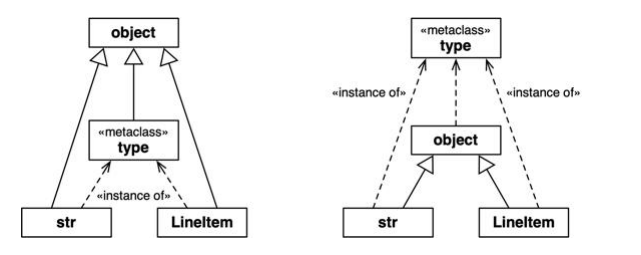
没有说 str 或 LineItem 继承自type。而是说,str和LineItem是type的实例。这两个类是object的子类。
![image-20250222150305390]()
两个示意图都是正确的。左边的示意图强调 str、type和LineItem是object的子类。右边的示意图则清楚地表明str、object和LineItem是type的实例,因为它们都是类
object类和type类之间的关系很独特:object是type的实例,而type是object的子类。这种关系很“神奇”,无法使用Python代码表述,因为定义其中一个之前另一个必须存在。type是自身的实例这一点也很神奇。
除了type,标准库中还有一些别的元类,例如ABCMeta和Enum。如下述代码片段所示,collections.Iterable所属的类是abc.ABCMeta。Iterable是抽象类,而ABCMeta不是——不管怎样,Iterable是ABCMeta的实例:
1
2
3
4
5
6
7
8
9
| >>> import collections
>>> collections.Iterable.__class__
<class 'abc.ABCMeta'>
>>> import abc
>>> abc.ABCMeta.__class__
<class 'type'>
>>> abc.ABCMeta.__mro__
(<class 'abc.ABCMeta'>, <class 'type'>, <class 'object'>)
|
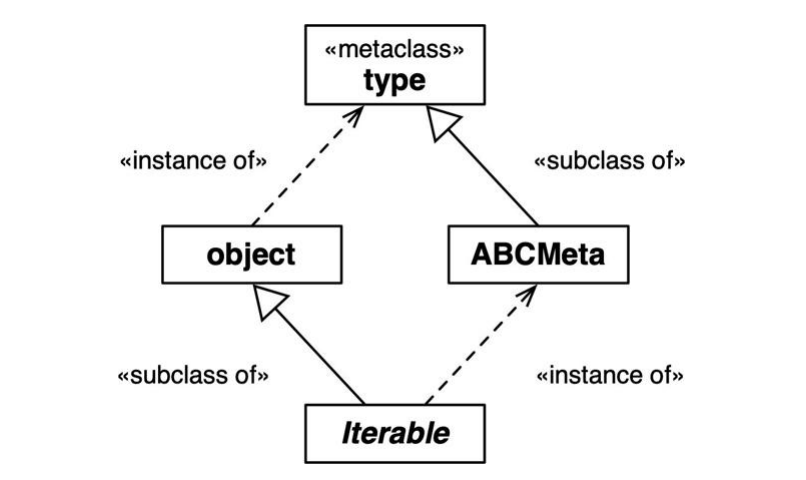
向上追溯,ABCMeta最终所属的类也是type。所有类都直接或间接地是type的实例,不过只有元类同时也是type的子类。若想理解元类,一定要知道这种关系:元类(如ABCMeta)从type类继承了构建类的能力。
![image-20250222150607587]()
所有类都是type的实例,但是元类还是type的子类,因此可以作为制造类的工厂。
理解元类计算时间的demo
其中demo中用到的代码:
1
2
3
4
5
6
7
8
9
10
11
12
13
14
15
16
17
18
19
20
21
22
23
24
25
26
27
28
29
30
31
32
33
34
35
36
37
38
39
40
41
42
43
44
45
46
47
48
49
50
51
52
53
54
55
|
from evalsupport import deco_alpha
from evalsupport import MetaAleph
print('<[1]> evaltime_meta module start')
@deco_alpha
class ClassThree():
print('<[2]> ClassThree body')
def method_y(self):
print('<[3]> ClassThree.method_y')
class ClassFour(ClassThree):
print('<[4]> ClassFour body')
def method_y(self):
print('<[5]> ClassFour.method_y')
class ClassFive(metaclass=MetaAleph):
print('<[6]> ClassFive body')
def __init__(self):
print('<[7]> ClassFive.__init__')
def method_z(self):
print('<[8]> ClassFive.method_z')
class ClassSix(ClassFive):
print('<[9]> ClassSix body')
def method_z(self):
print('<[10]> ClassSix.method_z')
if __name__ == '__main__':
print('<[11]> ClassThree tests', 30 * '.')
three = ClassThree()
three.method_y()
print('<[12]> ClassFour tests', 30 * '.')
four = ClassFour()
four.method_y()
print('<[13]> ClassFive tests', 30 * '.')
five = ClassFive()
five.method_z()
print('<[14]> ClassSix tests', 30 * '.')
six = ClassSix()
six.method_z()
print('<[15]> evaltime_meta module end')
|
1
2
3
4
5
6
7
8
9
10
11
12
| <[100]> evalsupport module start
<[400]> MetaAleph body
<[700]> evalsupport module end
<[1]> evaltime_meta module start
<[2]> ClassThree body
<[200]> deco_alpha
<[4]> ClassFour body
<[6]> ClassFive body
<[500]> MetaAleph.__init__
<[9]> ClassSix body
<[500]> MetaAleph.__init__
<[15]> evaltime_meta module end
|
from evalsupport import deco_alpha在导入 deco_alpha 时,会执行 evalsupport 的所有顶层代码,所以有了上面结果的前3个打印输出。
编写元类时,通常会把self参数改成cls。例如,在上述元类的 __init__ 方法中,把第一个参数命名为cls能清楚地表明要构建的实例是类。__init__方法的定义体中定义了inner_2函数,然后将其绑定给cls.method_z。MetaAleph.__init__ 方法签名中的cls指代要创建的类(例如ClassFive)。而inner_2函数签名中的self最终是指代我们在创建的类的实例(例如ClassFive类的实例)。
1
2
3
4
5
6
7
8
9
10
11
12
13
14
15
16
17
18
19
20
21
22
| <[100]> evalsupport module start
<[400]> MetaAleph body
<[700]> evalsupport module end
<[1]> evaltime_meta module start
<[2]> ClassThree body
<[200]> deco_alpha
<[4]> ClassFour body
<[6]> ClassFive body
<[500]> MetaAleph.__init__
<[9]> ClassSix body
<[500]> MetaAleph.__init__
<[11]> ClassThree tests ..............................
<[300]> deco_alpha:inner_1
<[12]> ClassFour tests ..............................
<[5]> ClassFour.method_y
<[13]> ClassFive tests ..............................
<[7]> ClassFive.__init__
<[600]> MetaAleph.__init__:inner_2
<[14]> ClassSix tests ..............................
<[7]> ClassFive.__init__
<[600]> MetaAleph.__init__:inner_2
<[15]> evaltime_meta module end
|
注意,ClassSix 类没有直接引用MetaAleph类,但是却受到了影响,因为它是ClassFive的子类,进而也是MetaAleph类的实例,所以由MetaAleph.__init__ 方法初始化。